
How to Start Retinol Without Irritation: A Beginner’s Plan for 2026
You’ve read the hype. Retinol smooths wrinkles, fades dark spots, clears acne. But you’ve also seen the horror stories — red, peeling, painful skin that looks worse than before. Which one happens to you?
It depends entirely on how you start. Get it right and retinol transforms your skin in 8–12 weeks. Get it wrong and you’re nursing a damaged moisture barrier for a month. Here’s exactly how to start retinol without irritation. No fluff.
Why Retinol Irritates Skin (And Why That’s Not Normal)
Retinol is a vitamin A derivative that speeds up skin cell turnover. That sounds good — and it is — but the mechanism is aggressive. It tells your skin cells to mature and shed faster than they naturally would.
When you apply too much, too often, or on unprepared skin, that accelerated shedding turns into visible peeling, redness, stinging, and breakouts. This is retinoid dermatitis, not “purging.” Real purging is small whiteheads in areas you normally break out. Peeling all over your face is a sign you overdid it.
What Actually Causes the Damage
Three things: dose, frequency, and skin barrier strength. A 1% retinol cream applied nightly on dry, compromised skin is a recipe for disaster. Beginners should start at 0.25% to 0.3% concentration, applied 2–3 times per week, on a fully moisturized face.
The biggest mistake? Thinking “more is better.” It’s not. Retinol works on a cumulative curve — consistency at low doses beats intensity at high doses every time.
The Only 3 Rules You Need to Follow
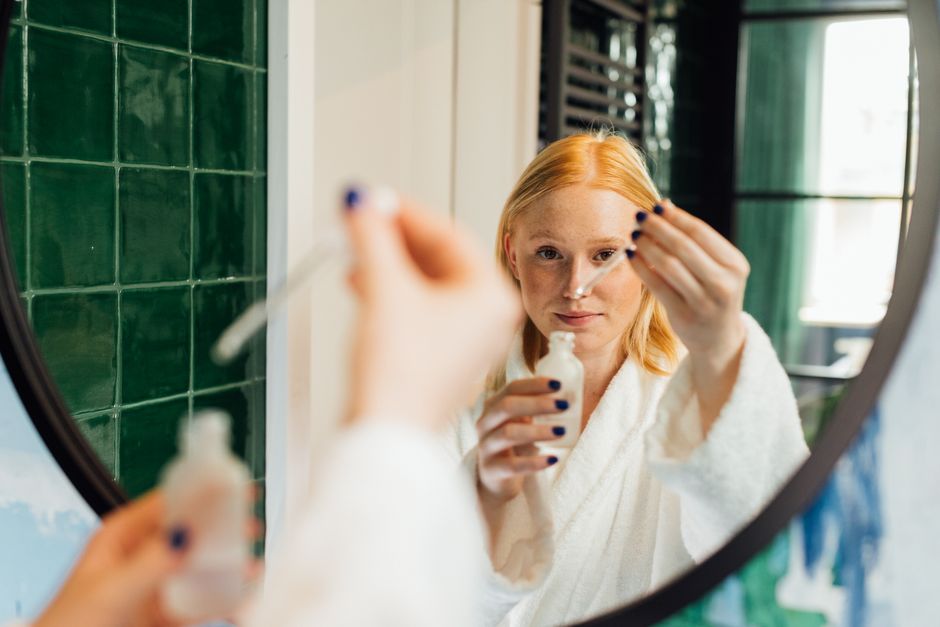
Ignore the 12-step routines. These three rules prevent 95% of retinol disasters.
- Start low, go slow. Use a 0.25%–0.3% retinol. Apply it twice a week for two weeks, then three times a week for two weeks. Only increase frequency after four weeks of zero irritation.
- Use the sandwich method. Moisturizer → retinol → moisturizer. This buffers the retinol, slowing absorption and reducing irritation by roughly 40% compared to applying retinol on bare skin.
- Never mix with acids. No AHAs, BHAs, or vitamin C on retinol nights. Those combinations strip the barrier fast. Keep your routine simple: cleanser, moisturizer, retinol, moisturizer.
That’s it. Follow these three rules and you can use retinol year-round without a single day of peeling.
Best Retinol Products for Beginners (2026 Picks)
Not all retinols are created equal. Some formulations are designed to be gentler. These four are the safest starting points, ranked by irritation risk.
| Product | Strength | Key Feature | Best For |
|---|---|---|---|
| CeraVe Resurfacing Retinol Serum | 0.3% | Encapsulated retinol + ceramides | Dull skin, texture, post-acne marks |
| La Roche-Posay Retinol B3 Serum | 0.3% | Vitamin B3 (niacinamide) buffers irritation | Sensitive or reactive skin |
| The Ordinary Retinol 0.5% in Squalane | 0.5% | Squalane base reduces drying | Oily or normal skin, low irritation risk |
| SkinCeuticals Retinol 0.3% | 0.3% | Hydrating formula with bisabolol | Anti-aging focus, dry skin |
For absolute beginners: start with the CeraVe Resurfacing Retinol Serum. It’s affordable, widely available, and the encapsulated delivery system releases retinol slowly, which dramatically lowers irritation. If your skin is sensitive, use the La Roche-Posay option — the niacinamide actively calms the skin while retinol works.
When NOT to Use Retinol (Real Tradeoffs)
Retinol isn’t for everyone, and pretending it is sells bad advice. Here’s when you should skip it or choose an alternative.
If you have active eczema, rosacea, or a compromised moisture barrier: Do not touch retinol until your barrier is fully healed. Retinol will make these conditions worse. Use barrier-repair creams (Cicaplast Baume B5, Avene Cicalfate) for 4–6 weeks first.
If you’re pregnant or breastfeeding: Retinol and all vitamin A derivatives are contraindicated. Switch to bakuchiol — a plant-based alternative with similar collagen-boosting effects but zero risk. The Biossance Squalane + Phyto-Retinol Serum is a solid swap.
If you can’t commit to SPF 50 every single day: Retinol makes your skin more photosensitive. Without daily sunscreen, you’ll undo all the benefits and increase sun damage. If you won’t wear sunscreen, don’t start retinol.
The real tradeoff with retinol is patience. It takes 8–12 weeks to see visible results. If you want faster results, retinoids like tretinoin (prescription-only) work faster but cause more irritation. For slow, steady, low-risk improvement, over-the-counter retinol is the right call.
What to Do When Irritation Happens (It Probably Will)
Even with perfect technique, some people get a mild reaction. Here’s how to handle it without quitting.
Stop all actives. No retinol, no acids, no vitamin C for 5–7 days. Use only a gentle cleanser and a thick moisturizer. The La Roche-Posay Cicaplast Baume B5 or Vanicream Moisturizing Cream are excellent choices for this recovery phase.
Apply a thin layer of petroleum jelly (Vaseline) on irritated spots at night. It seals in moisture and speeds barrier repair. Don’t smear it all over if you’re acne-prone — just on the red, peeling patches.
After the irritation calms down, restart retinol at half the frequency. If you were using it three times a week, go back to once a week for two weeks. Then slowly increase again. This is not a setback — it’s your skin telling you its current tolerance. Listen to it.
One more thing: if the irritation includes yellow crusting, oozing, or blisters, stop immediately and see a dermatologist. That’s not normal retinoid reaction — it’s contact dermatitis or an allergic response.
The Simple Truth About Retinol Long-Term
Retinol isn’t magic. It’s a well-studied ingredient that, when used correctly, improves collagen production, cell turnover, and skin clarity over months and years. The people who get the best results are the ones who treat it like a long-term habit, not a quick fix.
You don’t need to use it every night. You don’t need 1% strength. You don’t need to suffer through peeling. The best retinol routine is the one you can actually stick with without wrecking your skin. Start low, sandwich it, wear sunscreen, and give it three months before you judge the results.
Your skin will thank you next year.