
Affordable Skincare Routine For Sensitive Acne-Prone Skin: Affordable Skincare Routine for Sensitive, Acne-Prone Skin: A No-BS Blueprint
A common misconception is that treating sensitive, acne-prone skin requires a cabinet full of expensive serums. The opposite is often true. Overloading sensitive skin with active ingredients is a direct route to more breakouts, redness, and a wrecked moisture barrier. A minimal, targeted routine using the right drugstore staples is typically more effective than a 10-step luxury regimen. This blueprint focuses on what actually works for this skin type in 2026, without the hype or the high price tag.
Why Most Budget Routines Fail for Sensitive, Acne-Prone Skin
The failure isn’t usually about the price of the product. It’s about the mismatch between the product and the skin’s specific needs. A $10 cleanser that strips the skin can cause more damage than a $40 one that respects the barrier. Conversely, a $50 moisturizer loaded with essential oils can trigger cystic acne just as fast as a cheap one.
The real problem is threefold: over-exfoliation, barrier damage from harsh cleansers, and using the wrong type of moisturizer. Many budget routines for acne rely on high percentages of salicylic acid or benzoyl peroxide in every step. For sensitive skin, this is a disaster. It creates a cycle of dryness, irritation, and then rebound oil production that clogs pores again.
A 2026 update: newer formulations from brands like CeraVe and La Roche-Posay have improved their gentleness while maintaining efficacy. The key is knowing which specific products in their lines are formulated for sensitivity, not just acne. The CeraVe Acne Foaming Cream Cleanser (4% benzoyl peroxide) is a good example — it’s medicated but includes ceramides to buffer the irritation. Most people buy the wrong version.
The Core Rule: Treat the Sensitivity First, the Acne Second
This is the single most important principle. If your skin is red, stinging, or feels tight after washing, you cannot effectively treat acne. The inflammation from a damaged barrier will mimic or worsen acne breakouts. You must stabilize the skin before introducing any anti-acne actives.
Step 1: The Only Cleanser You Need (Under $15)
For the first 4-6 weeks, use only a non-foaming, cream or gel cleanser. Vanicream Gentle Facial Cleanser ($9.99, 8 oz) is the gold standard here. It has no fragrances, no dyes, no parabens, no formaldehyde releasers, and no lanolin. It removes light makeup and sunscreen without stripping. If you wear heavy waterproof makeup, use a plain oil like MCT oil (not coconut oil) as a first cleanse, then follow with the Vanicream. MCT oil is non-comedogenic and costs about $12 for a bottle that lasts a year.
Do not use micellar water daily. Most contain mild surfactants that can disrupt the barrier with repeated use. Save it for emergencies.
Step 2: The Moisturizer That Fixes Everything (Under $20)
Once the barrier is compromised, you need a moisturizer with ceramides, cholesterol, and fatty acids in the correct ratio. La Roche-Posay Cicaplast Baume B5+ ($17.99, 1.35 oz) is the most effective option for repairing damaged skin. It contains shea butter, panthenol, and madecassoside. It is thick. Use a pea-sized amount on damp skin. Do not slather it on like a body lotion — that can clog pores. For a lighter daily option, CeraVe Moisturizing Cream (the tub, $16.49, 16 oz) works well for most people. It is not the same as the CeraVe PM Lotion, which has niacinamide that can irritate some sensitive skin types.
Failure mode: Many people with sensitive, acne-prone skin avoid moisturizers entirely because they believe all creams break them out. The result is a dehydrated barrier that overproduces oil and traps bacteria. You must use a moisturizer. The trick is to pick one with a short ingredient list and no common irritants like denatured alcohol, fragrance, or essential oils.
When to Introduce an Active Ingredient (And Which One)
Only after 4-6 weeks of a stable, non-irritating routine should you add a single active ingredient. The goal is to find the lowest effective concentration that works for you. Two ingredients stand out for sensitive, acne-prone skin in 2026: azelaic acid and sulfur. Both are anti-inflammatory and antibacterial without the harsh side effects of benzoyl peroxide or retinoids for many people.
| Ingredient | Best For | Typical Price | Common Side Effects |
|---|---|---|---|
| Azelaic Acid (10-15%) | Redness, inflammatory acne, rosacea-adjacent breakouts | $8 – $16 (The Ordinary, Naturium) | Mild itching, usually subsides in 10 minutes |
| Sulfur (3-10%) | Cystic acne, whiteheads, pustules | $10 – $18 (De La Cruz, Kate Somerville) | Drying, strong smell |
| Niacinamide (2-5%) | Oil control, post-acne marks | $6 – $15 (The Ordinary, Good Molecules) | Stinging in high concentrations (10%) |
Compressed verdict: For most people with sensitive, acne-prone skin, azelaic acid 10% from The Ordinary ($8.50) is the best first active to try. Apply it after cleansing, before moisturizer, every other night. If you see no irritation after two weeks, move to nightly use. If you see stinging or redness, dilute it by mixing a drop with your moisturizer.
The SPF Trap: Why Most Sunscreens Make Acne Worse
This is the area where most affordable routines fail. A good sunscreen is non-negotiable for acne-prone skin because UV light darkens post-inflammatory hyperpigmentation (the red and brown marks left after a pimple heals). But most drugstore sunscreens contain chemical filters like avobenzone or octinoxate that can cause stinging, burning, and breakouts on sensitive skin.
The solution is a mineral sunscreen with zinc oxide as the sole active ingredient. Vanicream Facial Moisturizer with SPF 30 ($15.99, 2.5 oz) is the safest option. It contains 12% zinc oxide, no chemical filters, no fragrance, and no dyes. It leaves a slight white cast, but for sensitive skin, that is a trade-off worth making. If you need a tinted option, Australian Gold Botanical SPF 50 Tinted Face Mineral Lotion ($14.99, 3 oz) uses iron oxides for color and is very gentle.
Common mistake: Using a moisturizer with SPF as your only sunscreen. You need 1/4 teaspoon for your face and neck. That is a lot. Most people use half that amount. Buy a dedicated sunscreen and apply it over your moisturizer. Do not mix them.
Avoid These 3 Ingredients at All Costs
If you have sensitive, acne-prone skin, reading the ingredient list is not optional. These three ingredients are commonly found in budget skincare and are almost guaranteed to cause problems.
- Denatured Alcohol (Alcohol Denat.): Found in many gel-based moisturizers and mattifying sunscreens. It strips the barrier, causes rebound oiliness, and worsens acne. Avoid anything that lists it in the top 5 ingredients. Neutrogena Hydro Boost Water Gel (original) and many Korean sunscreens contain it.
- Fragrance (Parfum) / Essential Oils: These are the most common cause of contact dermatitis in skincare. Lavender, tea tree, peppermint, and citrus oils are all sensitizing. Even if they don’t cause an immediate reaction, repeated use can trigger delayed hypersensitivity. Stick to fragrance-free products. Cetaphil and Vanicream are reliable fragrance-free brands.
- High-Concentration Menthol or Camphor: Often added to acne washes for a “cooling” sensation. This is a sign of irritation, not efficacy. These ingredients can trigger perioral dermatitis and worsen redness. Avoid any cleanser that feels tingly or cooling on application.
The 4-Week Starter Routine (Total Cost: Under $50)
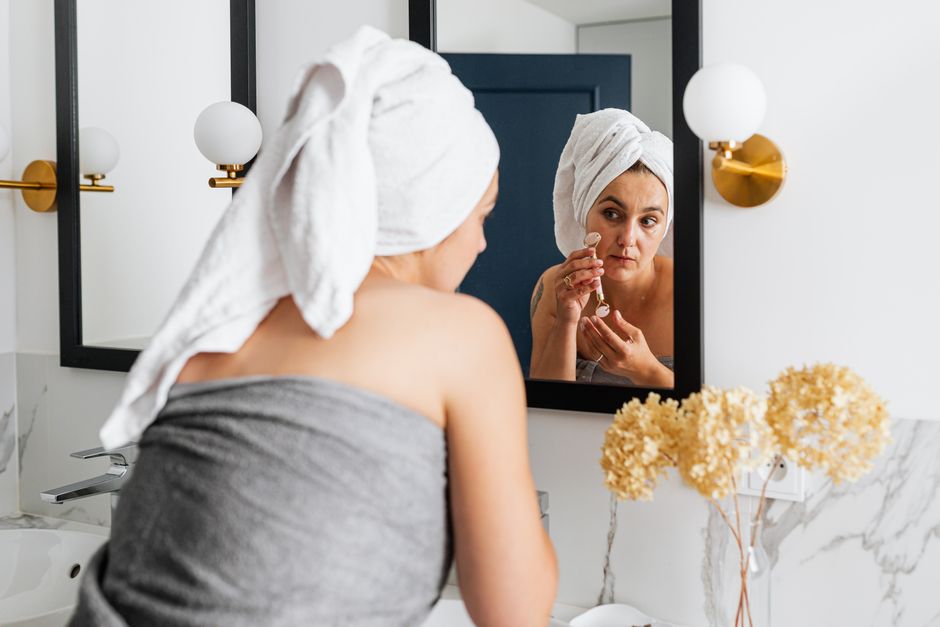
This is a complete, ready-to-use plan. Do not deviate from it for the first month. No extra serums, no face masks, no exfoliating toners. Just this.
AM Routine:
- Rinse with lukewarm water only (no cleanser).
- Apply Vanicream Facial Moisturizer with SPF 30 ($15.99).
PM Routine:
- Cleanse with Vanicream Gentle Facial Cleanser ($9.99).
- If using an active: apply The Ordinary Azelaic Acid 10% Suspension ($8.50) every other night. Skip if skin feels irritated.
- Apply La Roche-Posay Cicaplast Baume B5+ ($17.99) — pea-sized amount on damp skin.
Total cost: $52.47. That covers two months of use. After four weeks, if your skin is calm, you can add one more product — like a sulfur spot treatment for active cysts — but only if needed.
When to Ditch the Routine and See a Dermatologist
This routine works for mild to moderate acne in people with sensitive skin. It will not work for severe cystic acne, acne conglobata, or hormonal acne that is clearly tied to a medical condition like PCOS. If you have more than 20 active lesions, deep painful cysts, or scarring, you need prescription medication.
Over-the-counter products have limits. Azelaic acid 10% is not the same as prescription Finacea (15% azelaic acid gel). A dermatologist can prescribe topical antibiotics (clindamycin), retinoids (tretinoin, adapalene), or oral medications (spironolactone, isotretinoin) that no budget routine can replicate. Spending $50 on products when you need a $30 copay for a prescription is a waste of money and time.
Also, if your skin is burning, peeling, or breaking out in hives after using any product in this routine, stop immediately. Patch test new products on your inner arm for 5 days before using them on your face. If you suspect an allergic reaction, see a doctor, not a beauty counter.